

This post contains affiliate links.
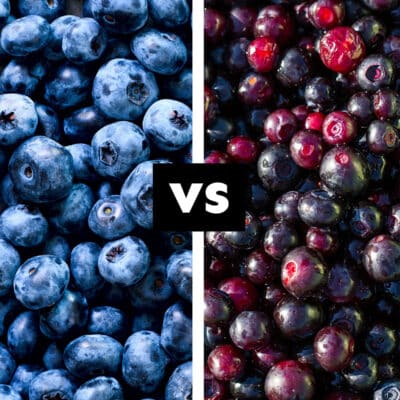
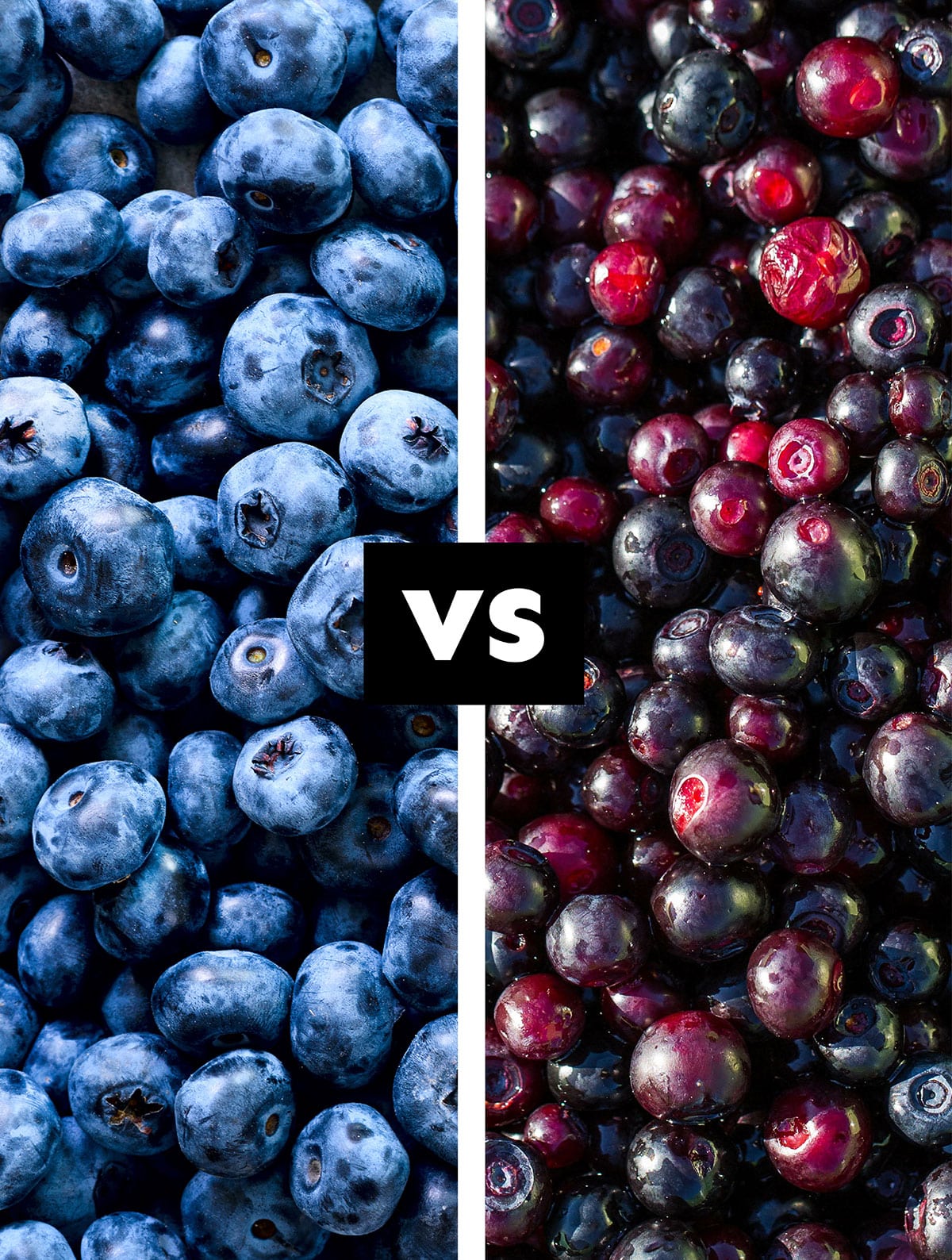
Two little blueberries that are nutritious and delicious. But how are they different? And which is better? Blueberry vs huckleberry – let’s break it all down!
Origin and History
Blueberry: Blueberries are small, round, sweet, and highly nutritious berries that belong to the Vaccinium genus. They are native to North America and have a rich history intertwined with indigenous cultures. Blueberries may have been the first fruits eaten by early people following the last ice age. Native Americans have certainly been consuming blueberries for centuries as both a food source and in medicinal practices.The development of cultivated blueberries began in the early 1900s through the collaboration of Elizabeth White and USDA botanist Frederick Coville. Living on a cranberry farm in New Jersey, White started conducting her own research into wild highbush blueberry plants in the 1890s and this started us down the road toward the great blueberries we know today.
Huckleberry: Everyone has heard of Huckleberry Finn, but most still have to ask what is a huckleberry? Huckleberries are small, round, and often dark purple to black berries that also belong to the Vaccinium genus. Different species of huckleberries can be found in various regions, but mostly the mountainous areas of the NW United States and Canada. They have been an important food source for Native American tribes for centuries.
Huckleberries thrive in the northern Rocky Mountains – specifically in Oregon, Washington, Idaho and Montana. The huckleberry is the state fruit of Idaho, and Trout Creek MT has an annual huckleberry festival. The town of Jay Montana, however, is called the Huckleberry Capital of the World, where the fruit is celebrated during a multi-day festival every year.
Huckleberries are not easy to find outside of the Pacific NW. They thrive in northern climates at altitudes over 2,000 feet, and are difficult, at best, to cultivate. This leads to them being hard to find and expensive because you have to buy them from people willing to go pick them.
The name ‘huckleberry’ comes from the older English name hurtleberry or whortleberry. In North America, these names were used for numerous plants with small red, blue, or blackberries. The name huckleberry seems to have just evolved and become cemented by Mark Twain’s fictional character Huckleberry Finn.
Appearance
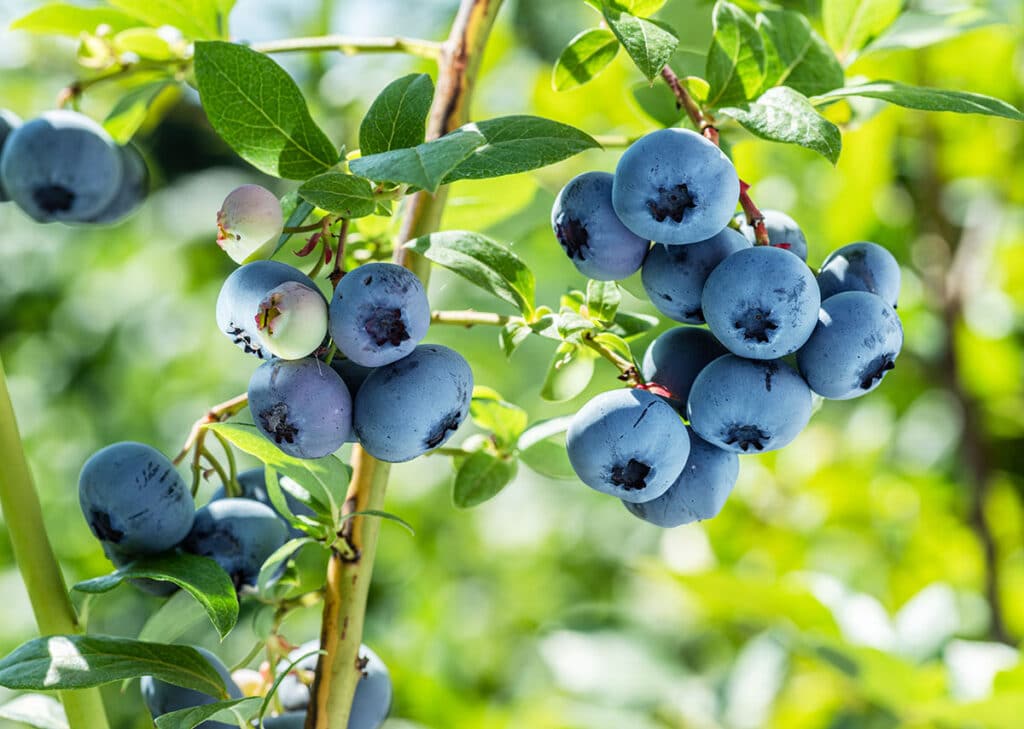
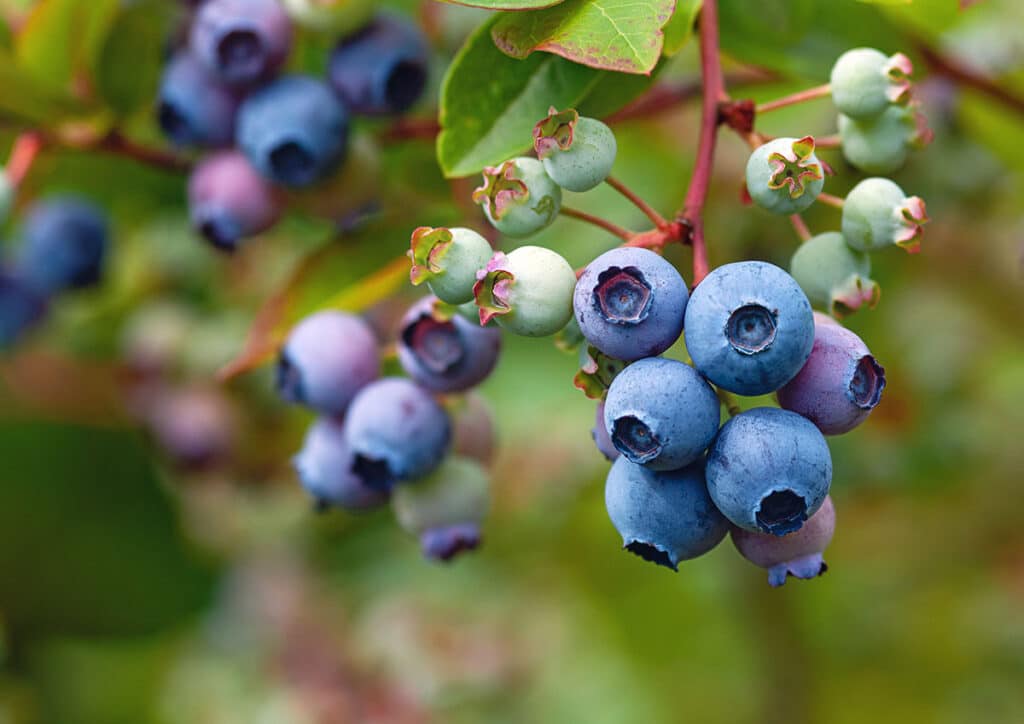
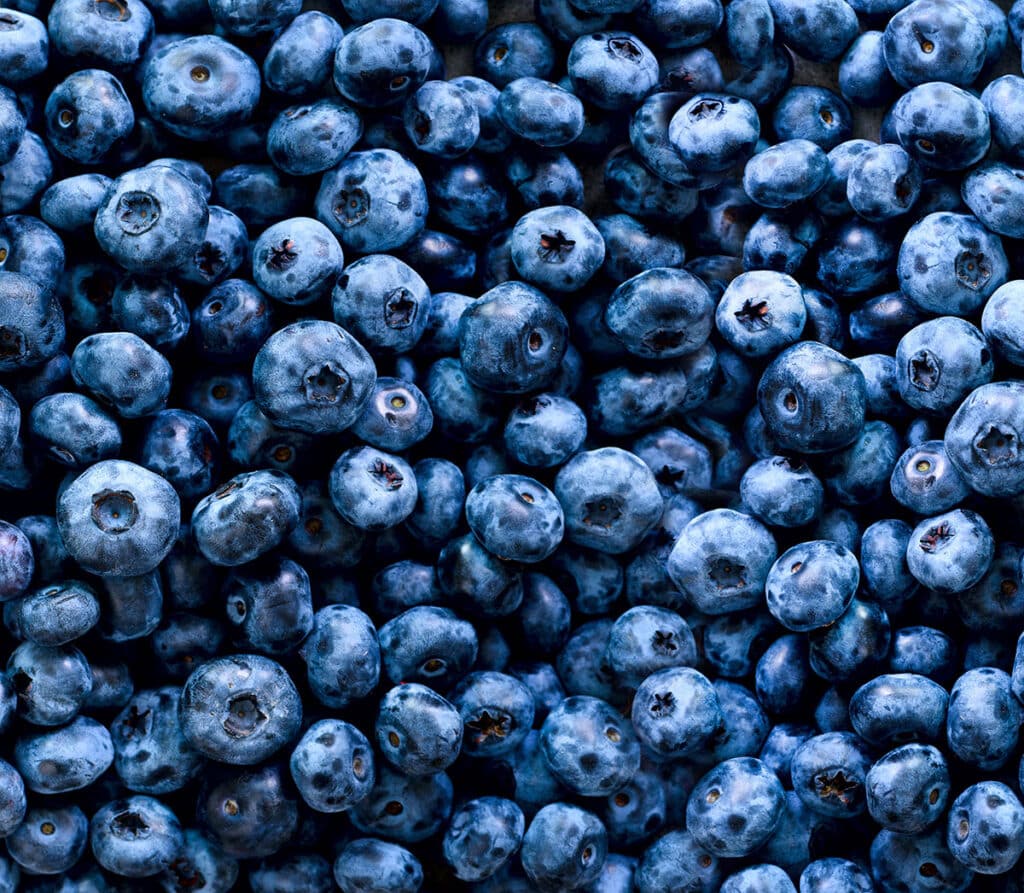
Blueberry: We feel kind of silly telling you what blueberries look like, but they are small, round, deep blue to purple-black berries with a smooth delicate skin. The size can vary depending on the variety ranging from 5-16 millimeters in diameter.
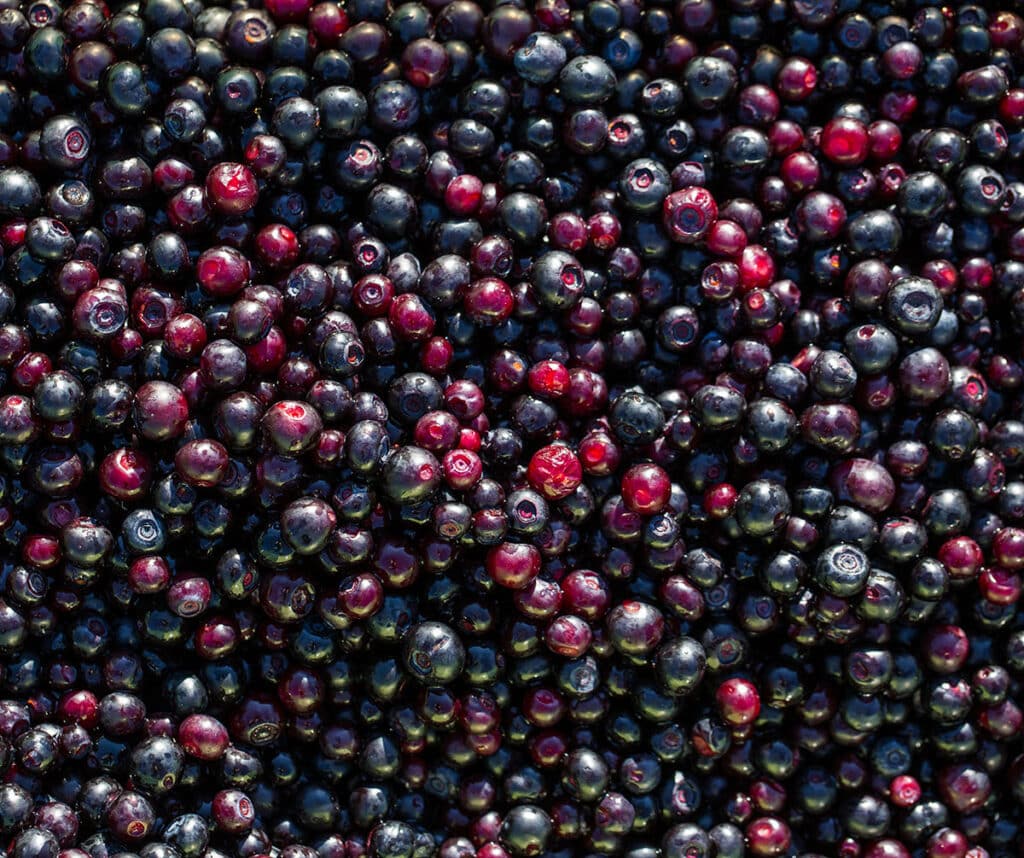
Huckleberry: What do huckleberries look like? Most of us have never eaten or seen them. Huckleberries are a little smaller than blueberries (5 to 10 millimeters by comparison). They aren’t as round as blueberries having a slightly oval shape, and are a little darker. They can be almost black.
Flavor and Texture
Blueberry: Blueberries are sweet with a slightly tangy flavor and a hint of earthiness. They are just plain sour if you eat them before they are ripe! Blueberries are soft and juicy, and they have a pleasing “pop” when bitten into. You have to be careful with them as they are very delicate which is why your hands will come away blue if you eat a handful of them.
Huckleberry: Huckleberries have a more intense flavor best described as fairly sweet but with a bit of tartness. They are often described as a blend of blueberries and raspberries. The flavor can vary depending on the species and the growing conditions, but it’s generally a nice balance of sweetness and tanginess. Their texture is similar to blueberries. They are thin-skinned and delicate.
Culinary Uses
Blueberries: These are incredibly versatile berries and can be used in a wide range of culinary creations. They are commonly eaten fresh, added to breakfast cereal, yogurt, and oatmeal, or incorporated into baked goods such as muffins, pancakes, and pies. Blueberries can also be used to make jams, preserves, sauces, and, of course, classic blueberry banana smoothies.
Huckleberries: Like blueberries, these are versatile berries that can be used in a variety of culinary creations. They are commonly used in baking, making jams, jellies, sauces, and syrups, and can be incorporated into pancakes, muffins, pies, and desserts. Due to their rich flavor, they are also used in savory dishes, such as glazes for meats or in salads. Additionally, huckleberries are often enjoyed fresh as a snack or added to cereals and yogurt. You can easily substitute them for blueberries in most cuisines.
How to Store
Blueberries: Store blueberries in your refrigerator, and do not wash them until you are ready to use them. Fresh blueberries can be kept in the refrigerator for up to two weeks.
You can freeze blueberries for longer storage. Wash and dry them before spreading them in a single layer on a baking sheet and placing them in the freezer until they’re firm. Once they’re frozen individually, put the berries in an airtight container or a resealable plastic bag. If you just put them in a freezer bag without this pre-freeze, you will end up with a clump of frozen berries. This prevents the berries from sticking together and allows you to remove the desired amount without thawing the entire batch. Frozen blueberries can be stored in the freezer for up to 6-12 months.
You can just take what you need from the bag and use them directly in your recipes frozen without thawing. Trust us, it works just fine.
Huckleberries: Store huckleberries in a sealed container in your refrigerator’s crisper drawer. They should last 1-2 weeks. If you want to keep them longer, freeze them following the same procedure we outlined for blueberries.
Varieties
Blueberries: There appear to be about 150 different varieties of blueberries. We won’t try to go into all of them, but here is a bit about four of our favorites and a list of honorable mentions.
Biloxi Blueberries are grown in warm regions and are noted for their plumpness, sweet taste, and juiciness. They are usually hand-picked as they are more delicate than other varieties, but this makes them a popular southern variety open for DIY blueberry picking.
Chandier Blueberry is a recently developed cultivar, only made available for commercial sales in 1995. The berries are large, and do not hold up well to machine picking. This tends to limit their sales to local markets and causes the price to be higher than other blueberries. This variety is another favorite for DIY blueberry picking.
Patriot Blueberry is a third type of blueberry worth mentioning. Only developed in 1976, the plant grows huge berries reaching the size of a quarter dollar. This blueberry variety was developed specifically to be disease-resistant, withstand cold, be self-pollinating, and produce larger crops. This is typical of many fruits. Horticulturists, often funded by national governments, work to develop fruits that taste better, grow in a wider variety of conditions, or produce larger yields.
Alaskan Blueberries are delicious berries grown in one of the few places in America where you can still find large tracts of wild blueberries that locals can go to pick. One ice cream shop in Fairbanks still pays customers to bring in quarts of wild berries to make their famous blueberry ice cream. I grew up in Alaska, so I had to give a nod to this wonderful fruit.
Huckleberries: There aren’t nearly as many different varieties of huckleberries as there are blueberries. This is understandable as they resist transplantation, cultivation, and attempts at hybridization. Here are a few of the better-known huckleberry varieties:
- Big Huckleberry
- Black huckleberry
- Box huckleberry
- Dangleberry
- Dwarf huckleberry
- Evergreen huckleberry
- Mountain Huckleberry
- Red huckleberry
Substitutes
Substitutes for Blueberries
When choosing a blueberry substitute, the prime considerations should be the flavor, texture, and sometimes color you are trying to get from the recipe. Some of these will work but won’t replicate the taste of blueberries well. Experiment with a little tasting as you mix ingredients.
Huckleberries: They are harder to find and more expensive than blueberries, but huckleberries are an easy substitute into a recipe that calls for blueberries.
Blackberries: Blackberries are reasonably similar to blueberries in taste and texture. They are slightly larger and have a slightly different flavor, but in breads, muffins, and certainly smoothies we think they are almost interchangeable.
Raspberries: These are another excellent option. They have a slightly tangy flavor and can bring a nice color and taste to your baking like blueberries do. Raspberries are also high in antioxidants and fiber like blueberries.
Strawberries: While strawberries have a different flavor and texture than blueberries, they can still be a great substitute in many recipes. They are sweet, juicy, and can add a vibrant red color to your recipe. Strawberries are also a good source of vitamin C and other nutrients.
Cherries: Sweet cherries can work as a substitute if you’re looking for a fruit with a whole different flavor. Cherries are also firmer than blueberries, so your recipe will likely have chunks of cherries in it where the blueberries would have blended in.
Currants: Currants come in red, black, and white varieties. They have a slightly tart and tangy flavor and can be used in both sweet and savory dishes. They are not the best substitute, but they would work.
Mulberries: Mulberries have a unique, mildly sweet flavor. They are particularly popular in dried form and can replace dried blueberries.
Cranberries: This one is a bit of a stretch substitute. Cranberries have a tart and slightly sour flavor, which will greatly alter the flavor of your recipes. This is only a good substitute if you really like their taste.
Substitutes for Huckleberries
If you find a recipe you like that calls for huckleberries and don’t have access to them (quite likely), just use any of the substitutes we listed for blueberries. Or, peruse our guide to 40 Types of Berries to find something unique.
Blueberry Vs Huckleberry Nutrition
Blueberries and Huckleberries are both very healthy fruits loaded with micronutrients and antioxidants.
Blueberry Nutrition Info: 100g (3.5 ounces) of blueberries provide:
- 57 Calories
- 16% of RDA of Vitamin C
- 24% of RDA of Vitamin K
- 3% RDA of Folate
- 1% RDA of Iron
- 1% RDA of Calcium
- 3% of RDA of Potassium
- 14.5 Grams of Carbs
- 0.7 Grams of Protein
- 2.4 Grams of Fiber
Blueberries are also particularly rich in anthocyanins, which are a type of flavonoid responsible for their vibrant blue color. Anthocyanins have well known antioxidant properties associated with various health benefits.
Huckleberry Nutrition Info: 100g (3.5 ounces) of huckleberries provide:
- 57 Calories
- 11% of RDA of Vitamin C
- 20% of RDA of Vitamin K
- 3% of RDA of Folate
- 2% of RDA of Iron
- 1% of RDA of Calcium
- 2% of RDA of Potassium
- 14 Grams of Carbohydrates
- 0.7 Grams of Protein
- 2.4 Grams of Fiber
Like blueberries, huckleberries are rich in the antioxidants known as anthocyanins. These compounds are also the natural pigments responsible for their dark color.
The difference between huckleberries and blueberries is really small. Blueberries are just so much easier to find. We hope you found something of interest or use in our comparison of huckleberries and blueberries, and as always, happy cooking!


