

This post contains affiliate links.
Everything you need to know about cooking with lavender! How to buy it, store it, pair it with other flavors, and cook it.
Hello from France! We zoomed through the rolling hills of southern Germany, graffiti covered suburbs of Paris, and farm lands of southern France and have wound up in Cavaillon, a quiet town in Provence.
It’s a slow paced kind of life here. In the hour that it took us to see the whole town yesterday, we reached the conclusion that the town’s inhabitants could also be used as landmarks. “Turn left at the man sitting on the steps. Keep straight when you see the group of people who keep kissing each other on the cheeks”. The people aren’t in a hurry to get anywhere, so neither are we.
Well, except to see the lavender. Today we’re heading deeper into the countryside, to the town of Gordes, home to the picturesque lavender fields of the Sénanque Abbey. And so in good French spirit, the next two weeks are going to be all about cooking with lavender! But uh, I haven’t actually cooked all that much with lavender before. So let’s all learn a bit, shall we? I’ve reached into the depths of the internet to find the highlights of what we really need to know about cooking with lavender.

Varieties of lavender
There are so many kinds of lavender, but the two main camps that you’ll likely come across are English and French.
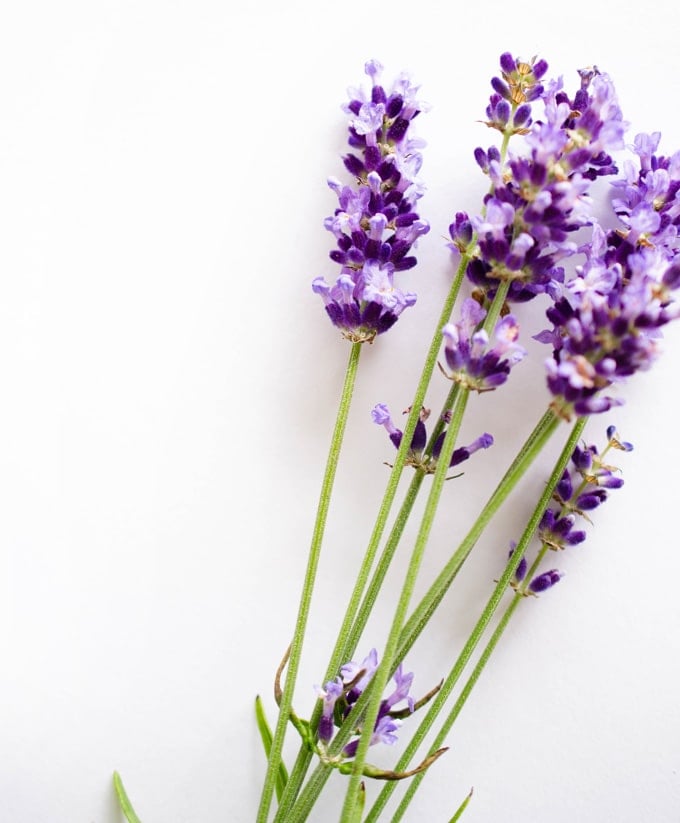
- English Lavender (includes Hidcote and Munstead): This popular variety has the sweetest fragrance and is great for cooking. Even the grey-green stems can be used in place of rosemary in some recipes.
- French Lavender: This variety has a strong pine flavor, making it less ideal for cooking. Spanish lavender, which is often associated with French lavender, is also strongly flavored and not great for cooking. Perhaps this is why lavender was never a staple in traditional French cooking? Moral of the story, use English lavender for cooking when possible!
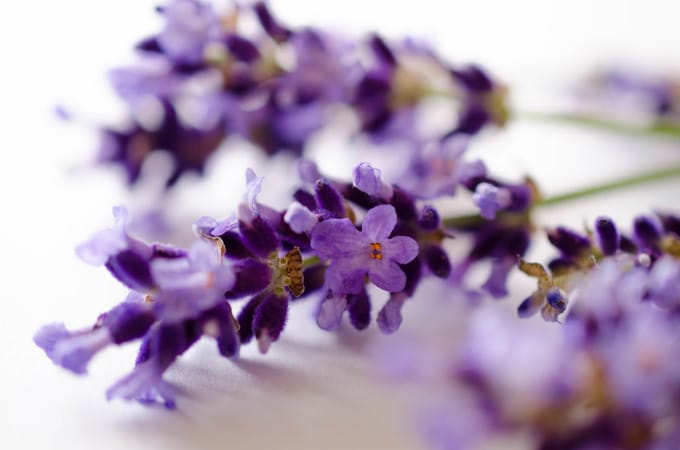
Where to find culinary lavender
As with all edible flowers, you’ll want to aim for “culinary” lavender when purchasing to ensure it hasn’t been sprayed or treated with unsafe chemicals. Of course, if you grow your own lavender, it’s likely safe to consume. Look for either organic lavender plants (i.e. not sprayed with anything not meant for consumption) at nurseries or large groceries, culinary lavender buds at specialty stores (like Whole Foods or local equivalents), or (when in doubt) find it online.
Tips for cooking with lavender
- Lavender can quickly make your dish taste perfume-y, and a little goes a long way (kind of like vanilla). Start with a little, taste, and add more as needed.
- You’ll want to either grind the buds (perfect for mixing into sugar), or seep and strain them from a liquid (like in simple syrup or honey).
- 1 part fresh lavender buds = 1/3 part dried buds.
- Lavender is often mixed into Herbes de Provence, a blend of strong herbs like rosemary, thyme, oregano, and lavender). Dip your toe in the culinary lavender world by trying out this blend first!
Lavender flavor combos
The pungent flavor of lavender pairs with light and bright flavors, like lemon, berries, honey, and mint. It’s great in baked goods, ice creams, and in some savory dishes (like a dry rub). Try it in this Lavender Lemonade Slush or this Lavender Vinaigrette Salad.
How to store lavender
If you’re cooking with fresh lavender, pick it as close to mealtime as possible (or cut and place in a jar of water until ready to use).
To dry lavender, cut it from the bush just before the buds open (when they open, fragrance is lost and the flowers become more fragile). Secure a bundle with a rubber band and hang upside down in a cool, dark place for about two weeks. You can either leave them hanging or remove the buds and store them in an airtight container in the freezer.


I am really acquiring a pallet for lavender infused drinks and foods. I can’t wait to try this slushy.
It’s such an interesting flavor, isn’t it? I’d love to hear how the slushy turns out for you! 🙂
I’m also just getting into this ❤️ I love lavender with lemon …. i have also been making lavender infused sugar to bake with… thank you for all of the great ideas 😍
Yess just in time for summer! 😀
I would like to make lavendar cupcakes for the first time. I plan on buying my culinary lavender online. Do you recommend the dried flowers, buds, or the oil?
Hi Karyn! Such a fun recipe! Look for culinary lavender, specifically the buds (the rice grain sized purple pieces).
I just picked some lavender from my neighbor and it looks just like your picture but with more leaves. Is this ok to use? Also, do I use the flower or leaves to bake with?
Thanks in advance! Wanted to bake it in scones. Also, is it better to use dry or fresh?
Great question, Deb! As long as the lavender was never sprayed with a chemical fertilizer or pesticide, it should be edible. Just use the buds for cooking 😀
Just used lavender to make the most delicious scones!!! Check out @goodbeeats on insta for the recipe & pics
That sounds AMAZING!
I want to learn to cook with lavender I have lavender extract how do I use it best???
I would use it the same as lavender buds – very sparingly and working your way up slowly! 😀
Lavender and rosemary in sweet baked goods! Amazing!
For Thanksgiving I roasted a turkey breast. I placed oranges, fresh rosemary,and lavender in the roasting pan water. I also placed sprigs of rosemary, lavender, and orange slices inside the Turkey. Once the Turkey Breast started to Brown I covered it with aluminum foil. My family absolutely raved about the flavor.
I have always been HIGHLY allergic to the fragrance of lavender. However, I was in the store the other day and found a lavender plant that looked very different than the “traditional” lavender (which I’ve since come to understand is English.)
I was super excited because I want to make teas and baked goods, I just couldn’t breathe with the English lavender.
Well… I discovered that my plant is Spanish Lav…. am I going to be able to use it all for the culinary world??
Spanish lavender is edible but tends to be more bitter!