

This post contains affiliate links.
Everything you need to know about chia seeds: variations, where to buy them, how to store them, and nutrition information!
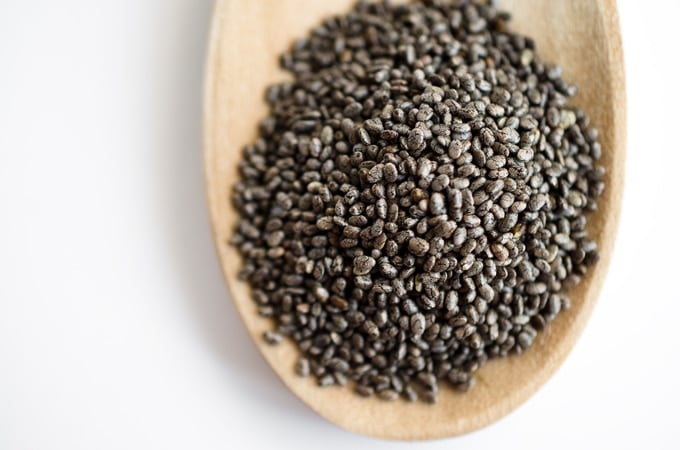
What are Chia Seeds?
Chia is a purple flowering plant indigenous to South America that, like quinoa, is cultivated for its seeds. And these seeds are THE American pop culture plant of choice. Chia Pets once entertained us 90’s kids, simultaneously making us feel like both loving pet owners and master gardeners.
Now that our generation has grown up, as have our chia seeds. Nowadays we need to think about our health and our future (*aghh*), and once again, chia seeds are there, full of promise and wonder.
But this “superfood” isn’t new to the food realm. It was first cultivated by Aztecs way back when, finally making its way up to the U.S. with the popularity of Chia Pets in the 1980’s and 90’s.
How to buy chia seeds
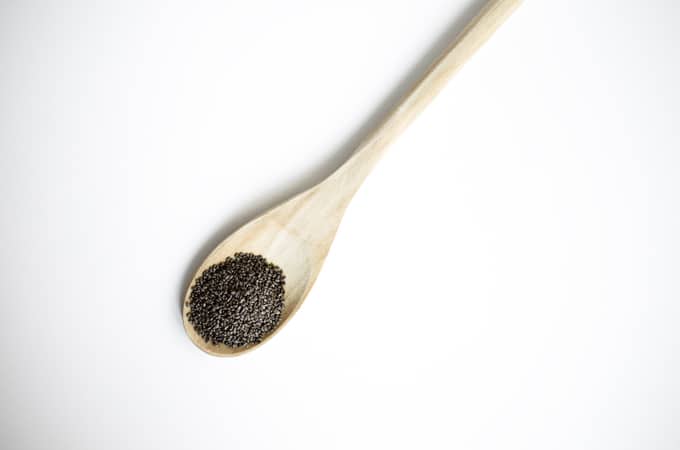
These can sometimes be tricky to find in your grocery. Here’s where to find chia seeds in the grocery store: rice/quinoa aisle, baking aisle, health / vitamin section. You may also have to try a health foods store or buy them online.
Types of Chia seed
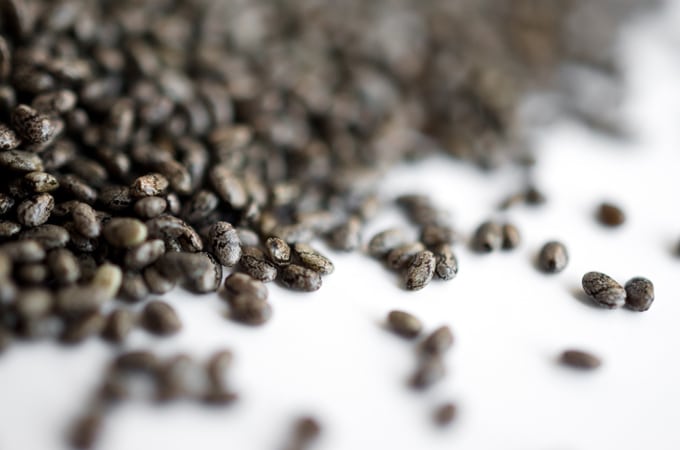
- Black: The most common seeds coming from the Salvia hispanica plant.
- Golden: A related seed from the Salvia columbariae plant. These are hard to come by (though I did find some in a kombucha I bought the other day!)
How to use chia seeds
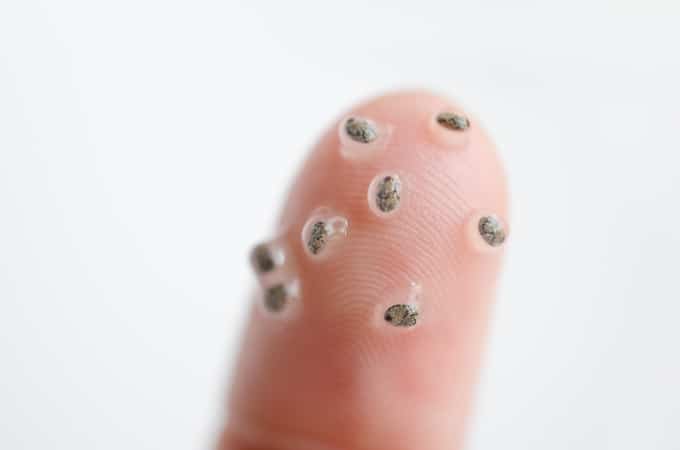
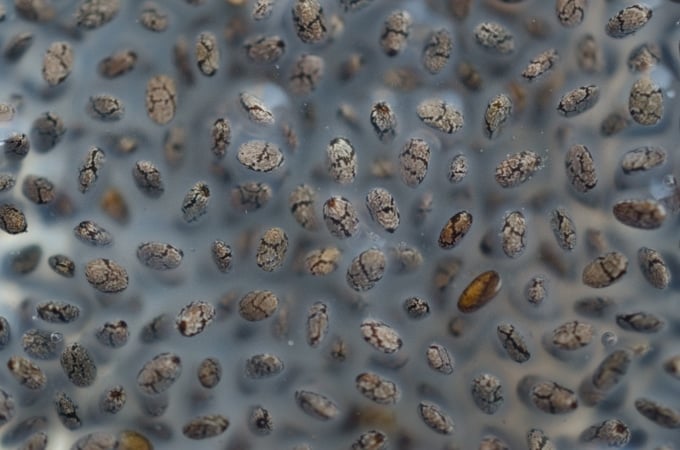
Chia seeds are versatile and can be worked into a number of dishes. When placed in water or liquid, the soluble fiber coating of the seed rapidly absorbs water, forming a gel layer around the insoluble fiber center. This makes it great for replacing gelatin in desserts or jams (like in this raw coconut chia parfait), adding a fun texture to water and juices (chia kombucha, anyone?!), or even as an egg replacement.
But they’re also fun as dry seeds too. Sprinkle them on salads, cereal, or ice cream, mix them into your cookie batter, grind them into a gluten free flour, really anything. They don’t have much flavor but pack a mean healthy punch!
How to sprout chia seeds
Chia seeds can be sprouted for consumption and make a great nutrition-dense garnish! Here’s how to sprout chia seeds:
- Place equal parts chia seed and water on an unglazed terra cotta plate (if you don’t have one, a regular dish is fine), and swoosh it all around to ensure all the chia seeds get moist.
- Let sit about 10 minutes then tilt out any additional water.
- If you’re using a glazed dish, you’ll need to keep the seeds moist some other way, so line the plate with a few paper towels and set chia seeds on top of that in a single layer.
- Cover your plate with plastic wrap and set in a sunny area.
- Make sure these little guys stay moist by lightly spraying them with water a few times per day.
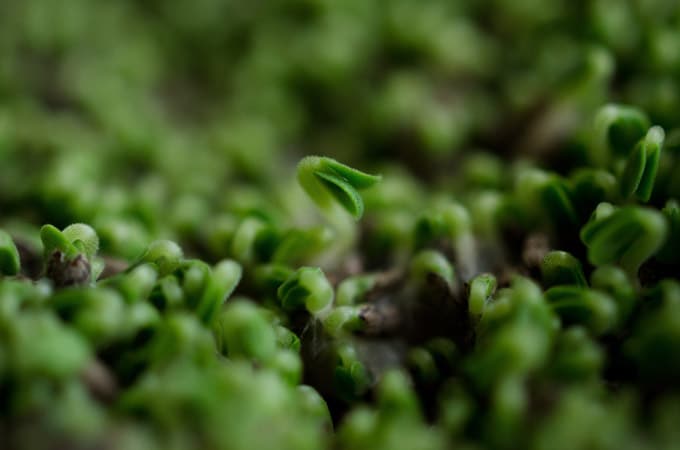
- Harvest them when they’re about ½ inch tall (4 to 7 days). Look at this little guy! I’m a chia mama! Grow, little guy, grow!
How to store chia seeds
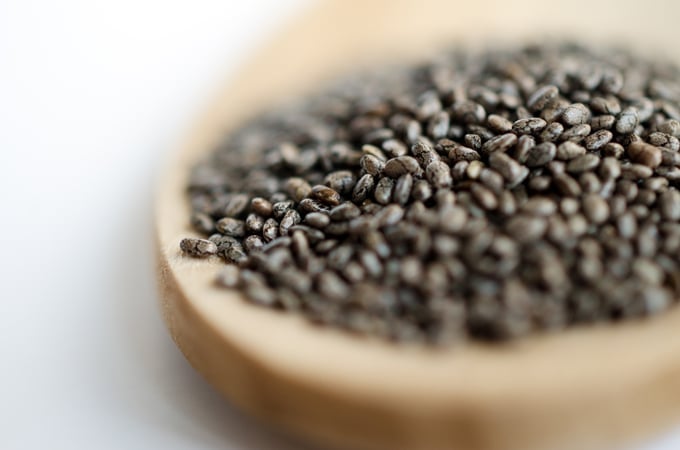
Dry chia seeds have a shelf life of forever. Like 5 years. They’re packed with healthy oils, which means they’ll stay freshest if stored in the refrigerator and in an airtight container. They can also be frozen, but with a 5 year shelf life, do you really need to?
Chia seed nutrition
Chia seeds nutrition per 2 tablespoons (28g)
The word “chia” comes from the Aztec word for “oily”. Well the Aztecs must have known what was good for them, because chia seeds are packed with healthy fats. 57% of the fat in chia seeds is omega-3 fatty acid, an anti-inflammatory polyunsaturated fatty acid.
The key word here is anti-inflammatory. Omega-3’s decrease risk of cardiovascular disease, lower blood pressure, lower triglycerides, and reduce atherosclerotic plaque build-up (all the polar opposites of what omega-3’s evil cousin, saturated fat, does).
- Calories: 132
- Carbohydrates: 12g
- Fiber: 11g, 42% Daily Value (DV)
- Protein: 4g
- Fat: 9g, 17.6% omega-3 + 5.8% omega-6 = 75% polyunsaturated fat
- 30% DV of Manganese: A trace element that plays a role in healthy brain and nervous system function.
- 27% DV of Phosphorus: A mineral that works with calcium to form calcium phosphate, the foundation of bones and teeth. Also plays a role in energy metabolism as part of ATP (adenosine triphosphate).
- 24% DV of Magnesium: A mineral that plays a large role in bone formation and maintenance in addition to being a part of over 300 reactions within the body.
- 18% DV of Calcium: 1% of the calcium in your body plays a vital role in vascular contraction/dilation and nerve transmission and signalling. The other 99% supports teeth and bone structure and function.
- 12% DV of Iron: A major component of hemoglobin, the proteins that make up red blood cells and carry oxygen around the body. This is a non-heme source, meaning it does not come from an animal. It is not absorbed as well as heme iron.


Is there a highly concentrated chia seed product? With all of the benefits magnified – i.e. for a Type 1 Diabetic?
Thank you for your reply.
ED GERRITY
I haven’t heard of anything like this before – but maybe if chia oil exists?
I am going to give it a try today, if it help my sleeping pattern, I would be very happy, also my energy levels.
I live in Zambia and have been searching for chia seeds in shopping malls but nothing in stock. How can I order?
You can find chia seeds online on Amazon or natural food groceries!